Friday, 6 January 2017

Why write a trilogy?

Writing a novel is not easy. Look at the number of people who have tried to write one and failed. It takes persistence, determination, belief, motivation, ideas, (lots and lots of ideas!), faith and courage, a good year of your life and a steely skin to handle all the rejection, criticism and ridicule from readers, critics and family alike.

So, considering how hard it is to write a single novel, why would anyone in their right mind want to try their hand at writing a trilogy, three interlinked books dragging the reader through a lavish set up, an intriguing middle and a jaw-dropping, heart-pounding finale?!

Well, quite simply because it’s great fun! Yes, it’s a demanding and a, at times, depressing undertaking that takes up years of your life (for me it was just over four years of my life given over to The Darkest Hand trilogy). It probably helps if you’re lacking a little in the sanity stakes (don’t worry if not, you will be by the end!) and that you love the idea of tackling projects few others would ever consider taking on or question that you could ever finish.

But there’s nothing like that sense of achievement when you’ve produced, made or done something huge, and writing a trilogy is huge. Not much comes bigger, in a literary sense, at least.

Writing a trilogy opens up a whole new side to yourself, things about you that you never realised; your ability to manage thousands of facts, juggle timelines, organise teams of bit part actors, ‘become’ your main characters in thought and voice, and, perhaps, most importantly of all, discover that you do have the talent, the patience and the strength to stay the course and finish your epic work.

You learn so much about yourself when you write a trilogy and, if you do manage to finish it, you’ll admire yourself more than you ever did before (the hating yourself phase will pass over time) and find you walk just a little taller amongst your peers.

Remember: many try to write a novel and fail. Even fewer consider a trilogy and of those who do take on the task, only a tiny percentage of those finish it.

Write a trilogy, and you’re in an elite exclusive group of writers within the whole of the world.

But writing a trilogy is much more about discovering about yourself and what you can achieve. It’s about discovering a world, YOUR world, the one that you’ve created exactly as you want it. Trilogies are about world building. With a novel, you become a sculptor of a story, but with a trilogy, you become a god!

In a standard novel, you have anything between 80,000 and 120,000 words to tell your tale. It’s enough to tell a good story, but there’s only so much you can say within that number of words. The pages, paragraphs and lines have to focus on the characters, the predicaments within which they find themselves and what they do to get themselves out of them.

Now, give yourself 500,000 words and suddenly you have the scope and opportunity to go big, bigger than anything you can fit in a single slim volume, big enough to explore every aspect your world, the places, the cities, the climate, the ecosystems, the different people, races, trade agreements, wars, fragile peace treaties, past atrocities and bitter crimes against whole countries, heaven or even hell. The world, quite literally, is your oyster.


Take, for example, The Hobbit. It is a magnificent story, but very focused on a single adventure. ‘There and back again’ it was co-named (with the title The Hobbit), and that’s because that’s exactly what it told the reader. A story about going to one place, and coming back again from it.
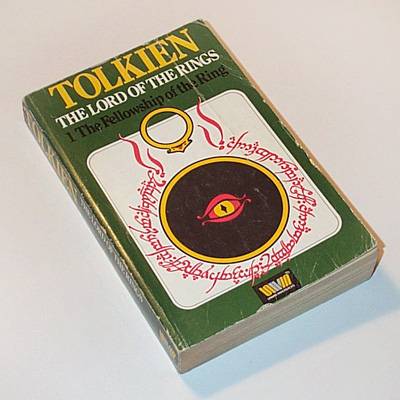

But The Lord of the Rings, that is an entirely different proposition. ’N (for Necromancer) is not child’s play,’ as Tolkien himself said when it was done. The trilogy gave him the time, the words and the pages to allow him to bring his entire world to life in the minds of his readers, a world that was as huge and as rich our own real world. As a result, LOTR is something far richer, far deeper, darker, more terrifying and wondrous than The Hobbit, far more epic than a single novel could ever be.

This ‘space’ to write, this opportunity to reach beyond the confines of a precise story, is a huge honour and privilege that only a few writers choose to take on. It’s not easy. It might well be the hardest thing you’ll ever attempt to do (it was for me), but once done, when you sit back with your cup of tea (or something stronger) and toast your achievement, that feeling is quite unlike anything else.

In the next blog, I will talk about ‘What I’ve learned by writing a trilogy’, complete with hints and tips as to how to approach, write and complete a whole trilogy.


If interested in reading my work, my trilogy is called The Darkest Hand, published by Duckworth Overlook (in the UK and Australia) and Overlook Press (in the US and Canada). The Damned (book 1) and The Fallen (book 2) are available now in the UK from all the usual places and all good bookshops, whilst the third final part, The Risen is released in May. The Fallen is released in the US and Canada in February 2017.

You can also download the free novella prequel to the trilogy, The Hunted from Amazon and iBooks.

Wednesday, 4 January 2017

What’s next in 2017, and beyond, for me and my writing?

So, The Risen, the third part in The Darkest Hand trilogy, is written! It's with my editor at Duckworth who's editing the manuscript and, once done, we'll then work together over the next couple of months to tighten everything up.

But when it's finished and sent to print, is this the end of the road for Tacit and the Catholic Inquisition? Well, never say never. I’ve loved him and Isabella, and all the other characters within their lives, and have felt very honoured to have been allowed into their world. But after living, breathing, fighting and feasting with the unruly lot for over four years, I’ve rather had enough of their company. When I finished ‘The Risen’, I was exhausted, wrung out, ground down at my desk.

It’s time for a long break ...

Three weeks on from finishing I’ve really enjoyed not having to get up early to write, enjoyed not feeling guilty when I’m doing something other than writing, loved reacquainting myself with family and friends, delighted in saying ‘yes’ to every social invite I’m still offered.

For all that, this is most definitely not the end of the line for my writing. I have ideas for other books (none of them related to The Darkest Hand, I hasten to add) and two of them I think are definitely worth pursuing.

I also have another novel already written. Entitled ‘Ripped’, I wrote it between 'The Damned' and 'The Fallen' in 2014 and it quite possibly might be the best thing I’ve done. It’s a modern day Jack the Ripper copy-cat killer thriller, but one with a lot of heart (not just those removed by the serial murderer) and one which asks, and maybe tries to answer, some of the bigger questions of life; who are we, why are we here and where are we going?

I will probably return to ‘Ripped’ next, whilst making final editorial amends to ‘The Risen’, and then plan to start work on my next book in the summer. Whatever the new novel turns out to be, it will most definitely assuredly not be another trilogy or have a werewolf in sight!

'The Risen', the last in The Darkest Hand trilogy, is written, and other bits of New Year news

Yes, it's true! ‘The Risen’, the final instalment of ‘The Darkest Hand’ trilogy is written!  It’s been an epic four year journey, which began in the market square of Arras, France, at the end of October 2012 and ended on Sunday December 18th 2016 in my little office in the middle of Wiltshire.
It’s taken me from the killing fields of Belgium and France, around the world a couple of times, into Hell and the violent logic of Inquisitors. I’ve witnessed first hand the terror of the soldiers of the Great War, the claws and jaws of werewolves and the corruption that power brings.
And I’ve survived, if not quite completely intact - my eyes have blown (I now have to wear to glasses), I have a stoop from the thousands of hours spent writing the many manuscript revisions and a lump on my spine from bad posture, my belly has expanded, contracted and expanded again after years of self-inflicted abuse looking for inspiration and creative release, and sanity has been stretched perhaps once too often to ever return entirely back to where it should be.
The second in the series, ‘The Fallen’, took me 16 months and 9 rewrites to complete, and I thought that was hard work. But it turned out to be a walk in the park compared to the complexity, depth and twisting machinations that eventually became ‘The Risen’. But the most important thing is it’s written! The one thing I wanted to achieve in my life, to write and publish a fantasy trilogy, is almost done.
I’m immensely proud of the final volume. It’s suitably epic, it’s hopefully satisfying to read and it should shock and entertain in equal measure.
It comes out in May this year in the UK and Australia, and the US and Canada in 2018.
So the Great War and The Darkest Hand trilogy all started in Sarajevo in 1914. ‘The Hunted’ is the prequel to the trilogy and documents events on that fateful day at the start of the war. It’s also readers’ first introduction to Inquisitor Poldek Tacit and the Catholic Inquisition.

Since its release, ‘The Hunted’ has been downloaded several thousand times by UK and Australian readers and has been an iBooks No. 1 bestseller. I am delighted to announce to my US readers that it is now available to download for FREE on iBooks and at Amazon.com in the States!
Happy New Year!

Thursday, 4 February 2016

10 things I learnt about myself by getting published, and things I would have liked to have known before I was

I got lucky.

The journey from starting my manuscript to getting it published was remarkably short. Two short years. And I do mean it when I say 'lucky' because luck plays a huge part in getting published. Of course, you need more than just plain old 'luck' to have a publisher pick you out from the millions also trying to get spotted. You need to be able write, and write well, but 'writing well' can mean far more than putting good words down on paper. It means being smart about the way you go about writing, about pacing yourself, how you know when to continue with a manuscript and when to change tack, as well as how to approach agents and publishers.

My debut novel, The Damned, came out in May 2015 (UK and OZ) with Duckworth Overlook, and will be published in the US and Canada in May this year with Overlook Press. It made it into the Book Depository's list of 'Best Books of 2015'.

In my time as an unpublished and then published writer, I've met a number of published authors and they're all completely different. None of them fit the same mould, other than it's clear they've been tested in some way by the experience of getting published and its left its mark upon them. It's also clear that they possess that vein of iron determination and grit about them. They've fought for, and they've survived the experience of, getting published.

I'm not sure if, like them, I carry this mark of getting published, an ambition I'd held since I was eight. But there are things I have learnt about myself that I never knew since writing and there are things I would have liked to have known before I had begun.

So here's a list of 10 for you, budding author, of what I've learnt in my journey so far;

1. Your first, second, and possibly third, manuscript will be rubbish
When I first started writing 'sincerely' I spent four years slogging away on my frankly ludicrous first manuscript that was to be 'my masterpiece'. Consisting of two towers and a band of dwarves (you can immediately see the problem here), I worked on this monstrosity for more hours than I care to remember, caressing every page, every line. It wasn't a total waste of time, because it helped me to begin to find my writing voice and proved to me that I loved sitting on my own in a chair writing for hours, days and weeks on end. However, I know I would have been far better setting myself shorter writing challenges and seeing where my direction best lay, rather persevering with my Tolkien-ripoff. Also, don't worry about finishing your first novel until you know it's something you genuinely want to put your name to. Writing, at the start, is about finding your edge, your voice, your love. The Damned was the first novel I ever completed.

2. Write your manuscript quickly, then rewrite it
In the early days I wrote and rewrote every page until I was utterly delighted by it, until it was, in my warped opinion, perfect. Then I moved on to the next page or scene, did the same, then the next, etc etc and so forth. What a ridiculous way of writing a novel! Writing is like art. When an artist sits down to paint, they don't work up in precise detail one part, then move on to the next. The five year old child at pre-school does this. The artist roughly sketchs out the piece, then they get in the tones, then initial colours, building up and up until the piece is finished. Writing is exactly the same. Write your first manuscript lean, get it mapped out, and then go back and rewrite over the bones.

3. Write every day
Whilst it took just two years to get published with The Damned, from first writing it to seeing it on the shelves, the journey to this point took me twenty years and over a million words. Writing is rarely something which hits like a bolt from the blue and empowers the writer to produce award winning prose from the start. It's like any skill, you have to work at it and a lot of this time feels soulless and pointless. But like elite athletes, you need to put in the shift if you're going to shift any units. I didn't write everyday. In fact, there were long periods of my life when I stopped writing completely. The longing and the ideas never went away, but I just, frankly, couldn't be arsed to write - and I regret this now. Would I have managed to get published sooner? Possibly, although see point 10. However, writing is a joy and I know I missed out on a lot of ideas and fun by not writing when I was doing something else. Which leads neatly on to…

4. If you'd rather do something else than write, give up and do something else
If you'd rather be out having fun than sitting at your desk and writing, give up and go and be amongst your friends and family. Writing is not a choice, it's a calling. Writers write, not because they have to but because they must. I felt it when I was eight years old and heard 'The Hobbit' read to me for the first time. It was like a calling. I understand why some people believe in God. It's as if a light comes on inside you, something which guides and commands - exactly the same as you feel as a writer. If you don't feel this compulsion, this drive, I suspect you won't make it - and you'll hate the journey trying to make it.

5. Be prepared for a long assault. Things don't happen quick
Someone once said to me, 'Writing a novel is like a war of attrition. You just have to be stronger than your book.' Novels take a long time to write. You should expect to put aside a year of your life to writing your novel. On top of this, you need to plan it (see point 6) and you need to research it. Once written, you then need to tout it around the agents and publishers. You might get lucky, like I did, and catch the eye quickly, or it might take years to get noticed. Whilst frustrating, if writing is your calling (see previous point), you will accept the time it all takes (begrudgingly, none the less.)

6. Embrace rejection. Love criticism
People in industry know best. You might not necessarily agree with them, but you have to listen to them and do as they suggest. You can be arrogant after your fourth bestseller. Up until then, listen and do as your agent, your editor or your published best friend mentor suggests. Don't see rejection as a bad thing. It's as much part of the industry as split infinitives and plot red herrings. Use it to guide and improve your manuscript. I've had some classic rejections. They've all been right and have helped in some way for me to become a better writer.

7. Plan your novel
The first two novels I wrote, The Damned, and a second unconnected novel straight after my first book, which might one day see the light, I wrote with no plan on paper, just a plan in my head. I got lucky (there's a theme here!). They were stories I had to write, and I knew how to write them. But luck runs out, as it did with me and Book Two of The Darkest Hand. I got myself in a pickle with it, a pickle which tormented me over and over again. The writing of the sequel took me too the edge of insanity and, at times, over it. Take the advice of a once broken man, plan your novel, and then write to this plan. It's so much easier and will allow you to concentrate on the quality of the writing, rather than on working out what's coming next - and if you're losing your mind.

8. Don't write for the money
I never set out to write for fame and fortune, so I'm glad I went into it with this knowledge already understood. But some people do write believing that they'll get published and never have to work again. The sorry truth is that only 1 in 10 published authors survives on writing alone. The average book sells 250 copies in its lifetime. It's not a business where you are likely to make any money at all. If this sounds unpleasant, scroll back to point 4 and reread. Remember, you write because you're commanded to, not because you see it as a cushy life everyone wants. It mostly likely will never be.

9. Always carry a notepad
Ideas come from the most weird of things and the most strange of times. Always have a pad at hand to jot them down. From the smallest idea, great things can grow. Writing is hard enough. Don't make it harder by trying to chase the good ideas in your head which have slipped just beyond your reach.

10. Magic happens, you just won't know when.
Magic is real. I know, because I've experienced it first hand. Sometimes you sit down and the book you're working on literally writes itself. The words come from somewhere inside you, a little magical store of them in your soul out of which they flow. Other times you can slog away and achieve nothing, and then this magical world reveals itself again and you power through. Whole parts of the Damned I read now and think, where did this come from? My second novel, I read it and think, did I really write this? I can't remember doing so! Magic. It happens. You'll never know how or when, but it happens. When it comes, harvest it, dear writer. Harvest it!

Good luck!

Wednesday, 3 February 2016

My debut novel, The Damned, amongst the 'Best Books of 2015', according to the Book Depository

I was knocked out to discover that my debut novel, The Damned, had made the Book Depository's list of their best books of 2015!

The book depository, the world's leading specialist online bookstore (according to their web site), included The Damned, the first in my trilogy The Darkest Hand, alongside the likes of Man Booker Prize winning, "A Brief History of Seven Killings" by Marlon James and Jonathan Franzen's "Purity", as one of the best works of fiction of last year.


This news coincides with The Damned being one of Amazon's 'Picks of the Month' for February, currently discounted to a mere £1.69! A bag of greasy chips would cost you more and sit on your hips a lot longer than my dark fiction novel ever will.

So pass on the junk food snack and download The Damned today from Amazon UK or Amazon Australia - and see if my debut gets into your own book list!

You can also download the acclaimed prequel to The Damned, The Hunted, for FREE from Amazon UK and Amazon Australia.

For friends in the US and Canada, the wait is almost over. The Hunted and The Damned arrive 1st March, published by Overlook Press.

You can see the full list of 'best of' books at http://www.bookdepository.com/best-of-2015

---

For more information about me, visit www.tarnrichardson.co.uk

Monday, 1 February 2016

The Damned, the first in my The Darkest Hand trilogy, is one of Amazon's 'Picks of the Month' for Feb. Get it cheap!

Just been told that The Damned, the first in my The Darkest Hand trilogy, is one Amazon's 'Picks of the Month' for February!

You can now own this first episode in the life of Inquisitor Poldek Tacit for just £1.69 or $3.24 in Australia. (Sorry, for my friends in the US and Canada, it arrives 1st March on your shores!)

Critically acclaimed, The Damned follows the adventures of Catholic Inquisitor Poldek Tacit at the start of World War One as he hunts down the killer of a Catholic Father within the city of Arras close to the trenches of the Western Front. However, quickly he discovers a far greater and more sinister plot which could have ramifications not just the church he serves but for the whole world.

"Engaging, intense and full of visceral descriptions, 'The Damned' is a sublime work of dark fiction meets mystery, meets horror that recalls the likes of 'Anno Dracula', 'Hellsing', and 'Constantine', with a hint of 'Fight Club'." (Intravenous Magazine)

"Richardson does a wonderful job of setting the scene; there’s plenty of atmosphere…The historical elements are fascinating, as is the author’s twist on the werewolf mythos, but the brooding, conflicted Tacit is the most compelling element. The conclusion will leave readers looking forward to the next installment." (Publishers Weekly)

"Allegorical and erudite, this imaginative first volume establishes a world, a monolithic villain, and a catapult for Tacit and Isabella, Sandrine and Frost to confront the evil lurking in the volumes to come." (Kirkus)

"Richardson's debut has mash-up leanings ... It works surprisingly well." (Daily Mail)

Download the The Damned, the Amazon Pick of the Week, from here UK or here Australia

You can also download the ebook preview to The Damned FOR FREE from UK or here Australia

Finally, the second installment to the Darkest Hand is released May 5th on Trade Paperback format. Reserve your copy now!

Friday, 29 January 2016

Making a comic out of your novel

The early 1980s were a great time to be a geeky kid with a big imagination. On the back of a crop of really great films for kids (both large and small), such as Star Wars, Indiana Jones, ET, Krull, The Goonies, The Black Hole, the world of Dungeons and Dragons was just taking off. Alone in a big old scary house, with just the resident ghosts and my imagination to keep me company, I was in heaven.

The invention of Dungeons and Dragons arrived just as my eyes, ears and mind were starting to open to grand stories and story telling. Into this maelstrom of exciting possibilities, three of my biggest literary inspirations then turned up in my life; J.R.R.Tolkien, Fighting Fantasy books and 2000AD.


At the age of eight, when I heard our class teacher Mrs Jones read us The Hobbit, I knew straight away that I wanted to write stories. 'The Warlock of Firetop Mountain', the first Fighting Fantasy book, taught me the excitement in telling a fantasy story. And when I peered into 2000AD, I knew that some of those stories I wanted to tell would be comics.

I haven't told a story as a comic - yet. But I know I'm halfway through a trilogy which would make a blinding comic and I was lucky enough to meet a supremely talented artist called Warwick Fraser-Coombe at Comic Con London 2015 who was able to take my vision of the main character from The Damned, Inquisitor Poldek Tacit, and turn him into a comic character on shiny paper.

What little I've seen and experienced of the comic book marketplace suggests that it's a huge and vibrant industry, but one where, unless you get your break and make it with the big boys, it involves a huge amount of effort for very little financial return - a bit like any form of publishing then! Comic book artists are driven, spirited, passionate individuals who produce their work because they love the medium, the art of telling stories and seeing them come to life.

If you can, visit the next ComicCon at your nearest city and spend a couple of hours chatting to comic book writers and artists at their stalls. They'll renew your faith in humanity and fire your imagination.

One day Tacit might grace a tome or tomes courtesy of Image or Dark Horse comics? In the meantime, enjoy staring into the stony face of the main man drawn by Warwick. And be sure to say your prayers tonight! Tacit's armed, and he's not afraid to use his revolver and his faith against you!